Laser - 6 Bible Coasters Wall Signs: Integrating Faith-Based Design into Your Creative Workflow
In the modern landscape of digital fabrication and small-scale manufacturing, efficiency is not just about speed; it is about versatility. For creators, hobbyists, and small business owners, having assets that serve multiple purposes is a significant advantage. The Laser - 6 Bible Coasters Wall Signs design set exemplifies this principle of dual utility. It is not merely a collection of static images but a flexible resource that bridges the gap between functional home decor and inspirational wall art. By understanding how to integrate these scalable vector files into your existing production pipeline, you can maximize material usage, reduce design time, and offer diverse products to your audience without starting from scratch.
This article explores the practical implementation of this design set, focusing on workflow integration, material compatibility, and strategic scaling. Whether you are a seasoned laser cutter operator or a newcomer to CNC machining, understanding the nuances of these files will help you execute projects with greater precision and consistency.
Understanding the Asset Structure and Compatibility
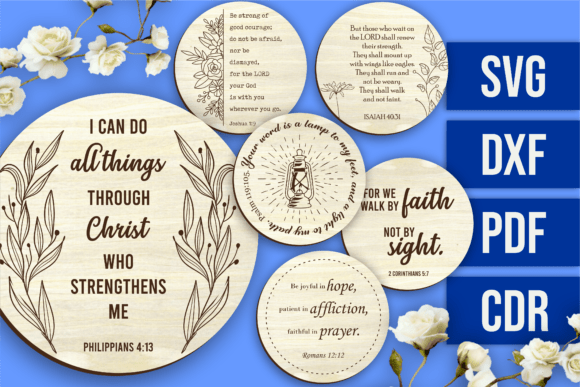
Before initiating any cut, it is crucial to understand the technical foundation of the asset. The Laser - 6 Bible Coasters Wall Signs package is delivered as a ZIP folder containing four distinct file formats: SVG, DXF, PDF, and CDR. This multi-format approach is not arbitrary; it is designed to ensure seamless interoperability across a wide spectrum of software ecosystems.
- SVG (Scalable Vector Graphics): Ideal for web-based design tools and modern laser software like LightBurn or Glowforge Premium. It maintains crisp edges at any resolution.
- DXF (Drawing Exchange Format): The industry standard for CAD applications. If your workflow involves AutoCAD, CorelDRAW, or industrial laser controllers, this format ensures geometric accuracy.
- PDF (Portable Document Format): Useful for quick previews, client proofs, or hybrid workflows where you might import vector paths into illustration software like Adobe Illustrator before sending them to the laser.
- CDR (CorelDRAW): Specifically tailored for users within the Corel ecosystem, saving time on file conversion and potential path errors.
By providing these formats, the asset eliminates the bottleneck of file conversion. In a professional workflow, time spent troubleshooting incompatible files is non-billable and frustrating. Having immediate access to the correct format for your specific machine allows you to move directly from concept to production. This compatibility ensures that whether you are using a desktop diode laser or a commercial CO2 unit, the integration process is smooth and error-free.
Strategic Scaling: From Coasters to Wall Art
The defining feature of this design set is its scalability. Each coaster is initially sized at 95x95mm, a standard dimension that fits most cup holders and table settings. However, the true value lies in the ability to scale these designs to create substantial wall signs. This flexibility allows you to adapt the same asset to different market segments and project requirements.
Optimizing for Coaster Production
When producing coasters, precision is paramount. At 95x95mm, small details in the scripture text must remain legible and structurally sound. During the planning phase, consider the kerf width of your laser beam. For intricate Bible verses, a narrower kerf setting may be necessary to prevent characters from merging or becoming illegible. Additionally, nesting is key to efficiency. Arrange the six designs on your material sheet to minimize waste. Since the shapes are uniform squares, they tile easily, allowing for high-density placement on wood or acrylic sheets. This stage of the workflow focuses on volume and consistency, ensuring each piece meets quality standards for handheld use.
Expanding to Wall Signage
Scaling the design for wall signs requires a shift in perspective. When enlarged, the same vector paths that worked for a coaster may reveal structural weaknesses if the material is too thin. For wall signs, you might scale the design to 300mm, 500mm, or larger, depending on the desired impact. At this size, the scripture becomes a focal point rather than a subtle detail.
Consider the visual weight of the text. Larger scales allow for more dramatic typography effects. You might choose to cut the sign from thicker hardwoods like walnut or oak to convey permanence and warmth. Alternatively, layered acrylic can create a modern, dimensional look. The workflow here involves adjusting power and speed settings to accommodate thicker materials and ensuring that the internal cuts (the negative space within letters) are supported adequately to prevent falling out during handling.
Material Selection and Workflow Adaptation
The choice of material significantly influences the final outcome and the required processing parameters. The Laser - 6 Bible Coasters Wall Signs are compatible with wood, acrylic, and other laser-safe materials. Each material demands specific preparatory and post-processing steps.
Wood: Natural wood offers a rustic, organic feel that complements biblical themes. When cutting wood, grain direction matters. Aligning the grain parallel to the text can enhance readability and aesthetic appeal. However, wood burns, so air assist and proper ventilation are critical. Post-cutting, sanding edges and applying a sealant or oil protects the piece and enhances the grain. This adds a step to your workflow but increases the perceived value of the final product.
Acrylic: Acrylic provides a sleek, contemporary look. It melts rather than burns, resulting in smooth, polished edges if cut correctly. Flame polishing can further refine the edges. When working with acrylic, masking tape is essential to prevent scratches during handling. The workflow for acrylic is generally faster in terms of finishing, as no sanding is required, but it demands precise focus height settings to achieve clean cuts without melting the surface excessively.
Composite Materials: For those experimenting with mixed media, these designs can be cut from MDF or plywood. These materials are cost-effective for large wall signs. However, they require thorough sealing to prevent moisture absorption and to cover the layered edges. Integrating these materials into your workflow involves additional finishing steps, such as priming and painting, which should be accounted for in your project timeline.
Integration into Business and Creative Processes
For entrepreneurs and small business owners, this asset fits seamlessly into a broader product strategy. It allows for rapid prototyping and diversified inventory. You can offer coasters as entry-level products and wall signs as premium items, all derived from the same design source. This reduces the cognitive load of creating new designs and ensures brand consistency across your product line.
In an educational or community setting, these designs can be used for workshops. Teaching participants how to scale and cut these files provides hands-on experience with vector graphics and laser operations. The clear, meaningful content engages users emotionally, making the technical learning process more rewarding.
Furthermore, the digital nature of the files supports remote collaboration. You can share the SVG or PDF with clients for approval before cutting, reducing the risk of errors. This digital proofing stage is a crucial part of a professional workflow, ensuring that the final physical product matches expectations.
Quality Control and Long-Term Usability
Maintaining consistency across multiple batches is essential for professional results. Establish a standard operating procedure (SOP) for handling these files. Save your machine-specific settings for both coaster and wall sign sizes. Document the power, speed, and frequency settings for different materials. This documentation serves as a reference, reducing setup time for future projects.
Regularly inspect the cut files for any node errors or open paths, especially after scaling. While the provided files are optimized, verifying integrity before each major run prevents material waste. Store the original ZIP folder in a secure, backed-up location. Organize your project folders by date and material type to streamline retrieval.
Ultimately, the Laser - 6 Bible Coasters Wall Signs are more than just digital files; they are a tool for efficient, meaningful creation. By integrating them thoughtfully into your workflow, respecting material constraints, and leveraging their scalability, you can produce high-quality, impactful pieces that resonate with your audience. This approach emphasizes planning, execution, and adaptability, core principles of any successful creative or business endeavor.